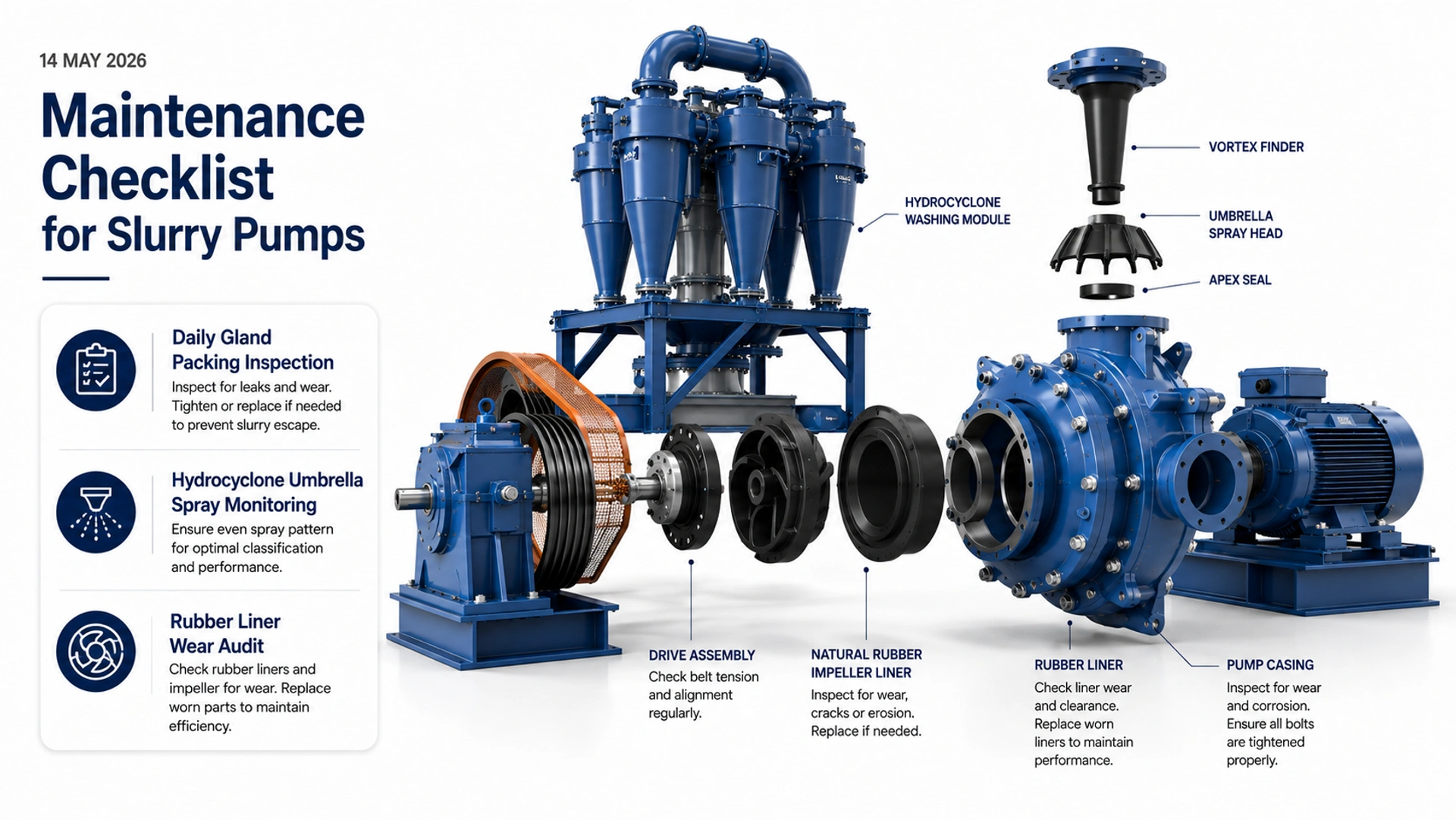
I n wet mineral processing and aggregate washing plants, heavy-duty centrifugal slurry pumps and hydrocyclones represent the heart of the hydraulic circuit. Pumping high-velocity slurries laden with sharp quartz sand, crushed granite fines, and abrasive gravel subjects wet-end pump components—such as impellers, casing liners, throatbushes, and suction cover inserts—to relentless hydrodynamic erosion and gouging wear. Without rigorous preventative maintenance, unmonitored wear leads to catastrophic pump failures, unscheduled plant downtime, and heavy production losses.
Establishing a systematic daily and weekly preventative maintenance checklist is essential for maximizing equipment service life, maintaining design operating pressures, and minimizing operating cost per ton of washed sand. Vyom Machinery recommends enforcing strict maintenance protocols across four key areas: wet-end wear monitoring, shaft seal integrity, drive assembly alignment, and hydrocyclone geometry checks.
1. Wet-End Wear & Impeller Clearance Adjustment: As slurry pump impellers and throatbushes experience gradual erosion, the axial clearance between the impeller shroud and front throatbush widens. Increased clearance permits high-velocity slurry re-circulation back into the suction eye, causing severe efficiency loss, reduced discharge pressure, and accelerated localized wear. Operators should perform weekly axial impeller adjustments, moving the rotating assembly forward via the frame adjusting screw to maintain a tight 0.5 mm clearance, restoring hydraulic efficiency.
2. Shaft Seal & Gland Packing Maintenance: Slurry pump shaft seals prevent high-pressure slurry from entering the bearing assembly. For gland-packed stuffing boxes, clean gland seal water must be supplied at a pressure 0.5 bar higher than the pump discharge pressure to flush abrasive particles away from the packing rings. Daily inspection must ensure a steady, slow drip of flush water (15-30 drops per minute); tightening gland nuts excessively starves the packing of lubrication, scoring the shaft sleeve. For mechanical seals, barrier fluid pressure and temperature must be logged daily.
3. Hydrocyclone Spigot Spray Geometry: The operating health of a slurry pump directly influences downstream hydrocyclone classification performance. Operators should inspect the hydrocyclone discharge spigot hourly. A healthy cyclone operates with a flared 'umbrella spray' underflow pattern (20° to 30° angle). If the pump loses pressure due to belt slippage or impeller wear, the cyclone underflow collapses into a solid, heavy stream known as 'roping'. Roping causes coarse sand to overflow into silt settling ponds and leads to severe internal vortex finder gouging.
4. Bearing Frame Lubrication & Vibration Audits: Heavy-duty slurry pump bearing assemblies require clean lithium-complex grease lubrication. Grease should be replenished every 500 operating hours according to manufacturer volume specs; over-greasing causes bearing overheating and seal blowout. Monthly vibration analysis using portable accelerometers helps detect early shaft misalignment, drive belt imbalance, or bearing race fatigue long before mechanical failure occurs.
By adhering to Vyom's comprehensive preventative maintenance checklist and utilizing genuine high-chrome iron (27% Cr) or natural rubber replacement liners, mine operators double the operational lifespan of slurry pump wet-ends, eliminate emergency breakdown shutdowns, and maintain optimal 24/7 washing plant throughput.