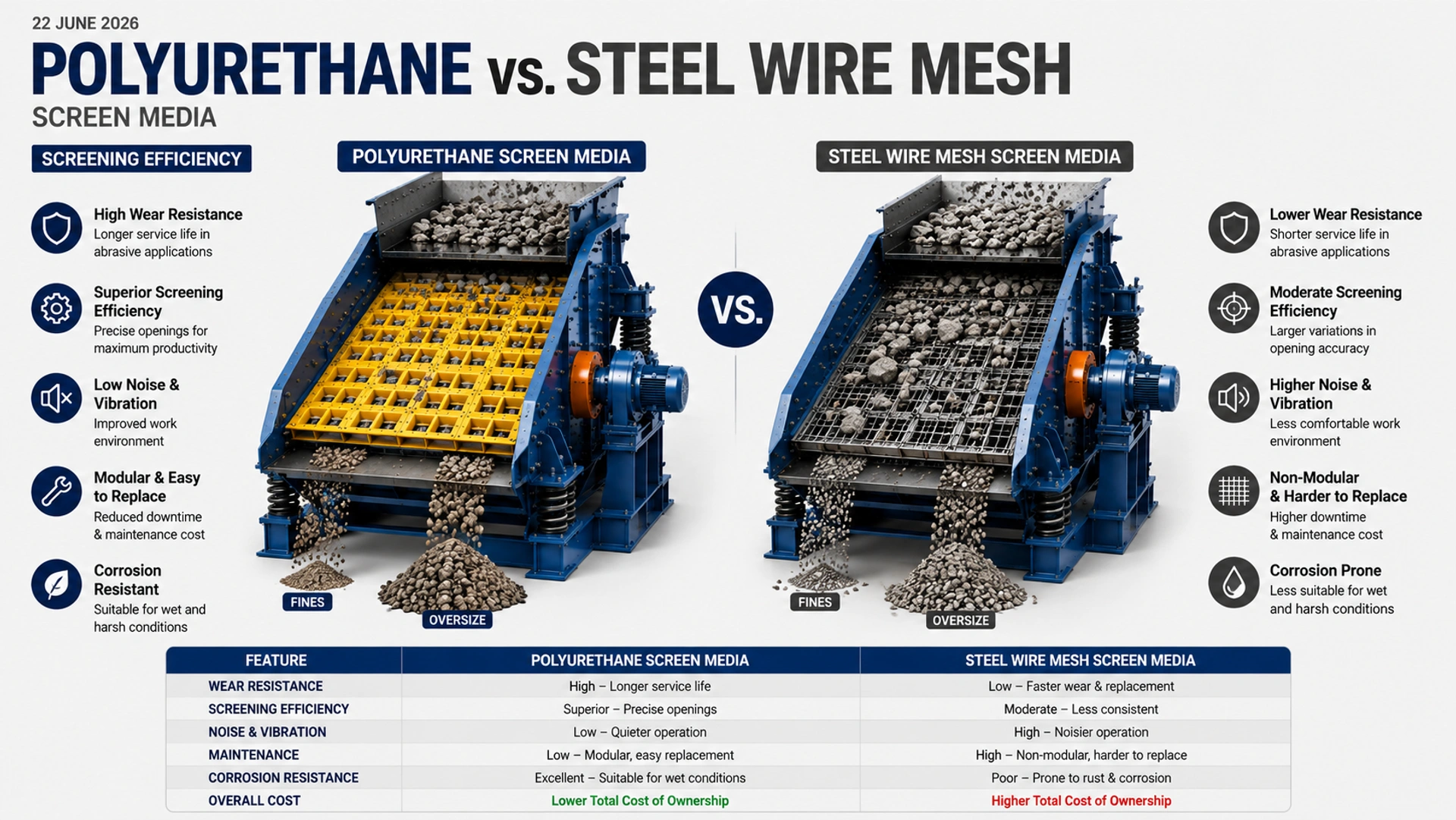
I n high-tonnage wet screening and dewatering operations, the choice of screen media directly dictates plant availability, maintenance expenditure, and product sizing accuracy. Vibrating screens processing abrasive quartz slurry, crushed granite M-Sand, or iron ore fines subject screen decks to severe impact and continuous sliding abrasion. Traditionally, woven high-tensile steel wire mesh was the industry standard; however, modular Polyurethane Screen Media has revolutionized screen deck performance.
Woven wire mesh screens are fabricated from high-carbon or stainless steel wires crimped together to form square apertures. While wire mesh offers low initial purchase cost and a high open surface area percentage, its operational performance in wet, highly abrasive aggregate washing applications is plagued by high failure rates. High-velocity mineral slurry rapidly erodes thin steel wire diameters, leading to premature wire breakage, aperture widening, and off-spec oversized contamination in the washed product.
Furthermore, steel wire mesh is rigid and prone to severe 'pegging' and 'blinding'. Near-size aggregate particles wedged into wire openings remain trapped, progressively reducing the active screening area and requiring manual deck cleaning with hammers or high-pressure spray bars during unscheduled plant shutdowns. Wire mesh replacement also requires changing out entire large deck sheets, resulting in extended downtime and heavy labor requirements.
In contrast, Vyom Modular Polyurethane Screen Media is manufactured from premium-grade elastomeric polyurethane polymers engineered specifically for high abrasion resistance and flex fatigue life. Under wet slurry processing conditions, polyurethane screen panels demonstrate a wear life up to 8 to 10 times longer than traditional woven wire mesh, dramatically reducing replacement frequency and long-term screen media expenditure.
The key performance advantage of polyurethane lies in its elastomeric memory and high dynamic elasticity. Under the high-frequency vibration of the screen deck (typically 1000 to 1500 RPM), individual polyurethane aperture ribs flex continuously. This micro-flexing action automatically ejects trapped near-size particles, completely preventing deck blinding and maintaining 100% open screening area throughout the shift without operator intervention.
Vyom polyurethane screen systems utilize a modular pin-and-snap or rail-mounting architecture. Screen decks are composed of small 305 mm × 305 mm (1ft × 1ft) or 300 mm × 600 mm panels. When localized wear occurs in high-impact feed zones, plant operators can replace individual worn panels in under 5 minutes without dismantling or discarding the surrounding good panels, reducing maintenance labor and screen deck waste to an absolute minimum.
Additionally, polyurethane panels absorb operational impact and damp structural vibration, reducing plant operating noise levels by up to 9 to 12 decibels (dB)—creating a significantly safer, quieter working environment for quarry personnel. For dewatering screens, specialized self-cleaning polyurethane slot apertures (e.g., 0.3 mm to 1.0 mm) retain fine sand while discharging water down to under 12% moisture content. Transitioning to Vyom Polyurethane Screen Media delivers maximum uptime, consistent product sizing, and superior long-term ROI.